The first live Nativity scene was re-enacted by St Francis of Assisi in 1223, in a cave near the Franciscan hermitage in Greccio, Rieti, in the region of Lazio. After his trip to the Holy Land in 1219-1220, Francis was inspired to ‘bring to life’ the story of the Nativity in Bethlehem in his homeland, and from that Christmas in Greccio, the tradition of the live Nativity scene was to be spread through the world by the Franciscan Order. In this drawing, the trip begins in the top left with Bethlehem, the place of the original Nativity. Joseph and Mary make their way towards Bethlehem to find a place where the heavily pregnant Mary can give birth to baby Jesus. The birthplace of Jesus was simple stable inside a cave now preserved under the Church of the Nativity in Bethlehem, part of which has been in the custody of the Franciscan Order from the 1300s. Turning to the top right of the drawing we can see the hermitage of Greccio, already familiar to Francis and chosen by him to re-create the birthplace of Jesus in a makeshift stable inside a cave close by. Illuminated by a star, the Nativity scene is depicted in the moment when the image of Baby Jesus appearing in the manger, is taken up by Francis and cradled in his arms. Sharing the joyous scene beside him are Mary and Jesus and friar Elia, an ox, a mule and other animals so loved by Francis. From this place the Nativity scene travels to Assisi and the Basilica of St Francis, where it was painted by Giotto in one of the frescoes adorning the Upper Basilica. A majestic tree grows up from the cave below and rises through the Basilica towards Heaven. Between the branches of the tree, the hermitage of Le Carceri can be seen on the slopes of Mount Subasio, and to the left the branches reach out to the city of Assisi and the places associated with the life of St Francis and his Order, such as the Cathedral of St Ruffino, the Basilica of St Clare, San Damiano and Santa Maria degli Angeli housing the sacred Chapel of the Porziuncola. Below Greccio is Cortona and the Convent of St Francis, built, like the Basilica of St Francis in Assisi, by brother Elia, who is standing in front of the church with Francis. In the square near the town hall, the three ‘Wise Men’ from the East, bearing gold, frankincense and myrrh, look towards the star guiding them towards the birthplace. In the bottom right corner below Cortona sits a shepherd, who here represents Pope Francis, intent on saving his lost sheep (next to him is his coat of arms). Another important place in the life of St Francis depicted here between Bethlehem and Assisi is the Sanctuary of La Verna on Monte Penna, (province of Arezzo), where Francis received the stigmata in 1224. Following the river below, we arrive, passing under the Ponte Vecchio in Florence, at the hermitage of ‘Le Celle’ in Cortona, a once isolated place where Francis retreated to pray. The highest of the three bridges at Le Celle leads us to the Basilica of Santa Croce in Florence, where a chapel was donated to Francis in 1211. Supporting this important cultural centre and seat of the Franciscan Order is a mighty tree, which grows from the body of St Francis and whose branches bear the martyrs and saints of the Order. A wonderful representation of the Franciscan family tree can be seen painted on the wall inside the ex-refectory of Santa Croce, represented here to the right of the church. In fact, the tree plays a central role in this drawing as a sacred image and object of veneration rich in symbolism, not only of Christmas and the Nativity, but as the metaphor of the brotherhood that unites all Franciscans. In the bottom corner, a tree of the Franciscan Order (inspired by a fresco in the Convent of the Immaculate Conception in Lauria, Basilicata), grows in a large vase which bears the symbol of the Order. Francis and Bernardino of Siena can be seen feeding and watering the tree, whose trunk entwines as it grows, symbolising the strong ties that bind the brotherhood. Above is the Basilica of St Francis in Siena, where the Franciscans arrived after the death of Francis in 1226. The building was finished in 1326 and on the pavement in front are the arms of two of the seventeen ‘contrade’ (or districts) of Siena (il Bruco and La Giraffa) whose confines meet at the church. Behind is the Piazza del Campo with the Palazzo Comunale and bell tower. The landscape of ‘le Crete Senesi’ forms the backdrop. But this Nativity travels further north, to Bologna, represented here by the famous ‘Torre degli Asinelli’ and ‘Garisenda’ and her gracious porticoes. The Franciscans arrived here with Bernardo di Quintavalle in 1213, to be followed a few years later by Francis himself, whose visit was a great success. The impressive Basilica of St Francis in Bologna was begun in 1236 and is testimony to growing importance of the Franciscan Order in the years after the death of its founding Father. But this is just the beginning of the story, as the Franciscan Order gradually spread through Italy, Europe and beyond, carrying with it the tradition of the live Nativity scene, which, thanks to St Francis and his trip to the Holy Land, can be seen and enjoyed today in many places at Christmas time.
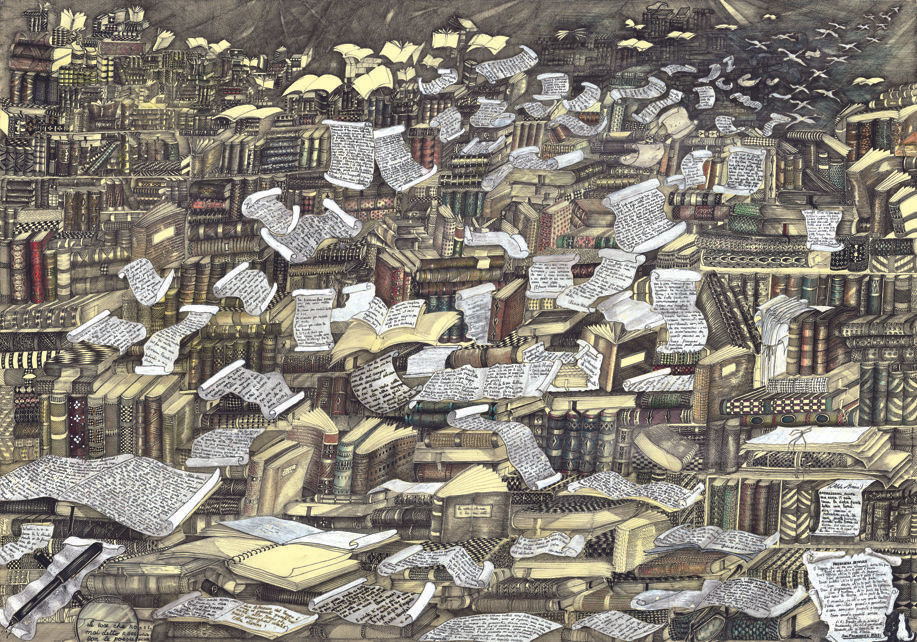
Because I was too shy, or too proud, or too arrogant, I have never told you what I really feel for you…but now I will tell you with the most beautiful love poetry ever written…dedicated to you my Love, you who have always been by my side and given me so much!

More than 80 years ago, a boy was born to a couple in the mining village of Welbeck in Nottinghamshire, England. The boy’s father drove the steam trains at the colliery and it was perhaps there that the white haired boy began his love for all things steam. However, his future was not to be down the pit but at his uncle’s small holding in Long Bennington, just inside the county of Lincolnshire. His uncle was also a wheelwright and as the boy became a lad, his willingness for hard work of all kinds shone through. In the meantime he excelled at school and was the first to go to the local boy’s grammar and then onto agricultural college. He wanted to become a farmer and in so doing met his wife, her father a sheep farmer in Lincolnshire. He borrowed a small amount of money from his uncle to buy a piece of land and began to realise his dream. Pigs, sheep, cattle, hens, barley, wheat, potatoes, sugar-beet...he raised them and grew them all, alongside his wife, who worked as hard as he…. The small holding grew over the years to become a substantial arable farm on the flatlands of around Long Bennington…and the children arrived, first three girls and finally the long awaited boy, playing and working whilst their parents worked hard on the land…and hard they did work…holidays were a rarity until older age, entertainment was found there on the farm and in the village…ponies, cats and dogs came and went, and gradually the family moved to a bigger home, still in the same close-knit community. The man became chairman of the parish council, the schoolboard, the village hall committee…always at hand to help and offer advice…so much so he was awarded the MBE by the Queen…a man of few words but with a big heart, respected by all. Also an entrepreneur, always on the alert for new business opportunities…one example being the feed mill he bought and eventually rebuilt, to be run by his son…a carbon copy of his dad! And all that hard work has been rewarded by seeing his family grow up …a family story like many others…made up of good times and bad, sacrifice and reward, success and failure, illness and health…a good story, the rich tapestry that is everyone’s life… and how would you draw your life? What would it look like? Thanks Dad, you’re an inspiration!


The nine muses, the font of inspiration of all literature, science and the arts in Greek mythology, dance and play in honour of their parents, Zeus and Mnemosine on Mount Helicon. The white horse Pegasus, a great friend of the muses, joins in the dance amongst the trees and springs which, according to the myths, sprung forth where his hoofs touched the earth. To the left of the scene and looking down on the muses, stands the mighty Minerva, Etruscan and Roman god of wisdom and knowledge and sponsor of the arts. The muses are each associated with a symbol representing their principal art, from left to right: Erato – love poetry – bow and arrows Polyhymnia – sacred poetry and hymns – pensive look, the veil Melpomene – tragedy – tragic mask and a sword Thalia – comedy – comic mask Clio – history – a scroll Terpsichore (seated) – choral dance – a lyre Euterpe – music, song and lyrical poetry – a flute and laurel wreath Urania – astronomy – a celestial globe Calliope (the head muse) – epic poetry – a writing tablet and stylus and a book
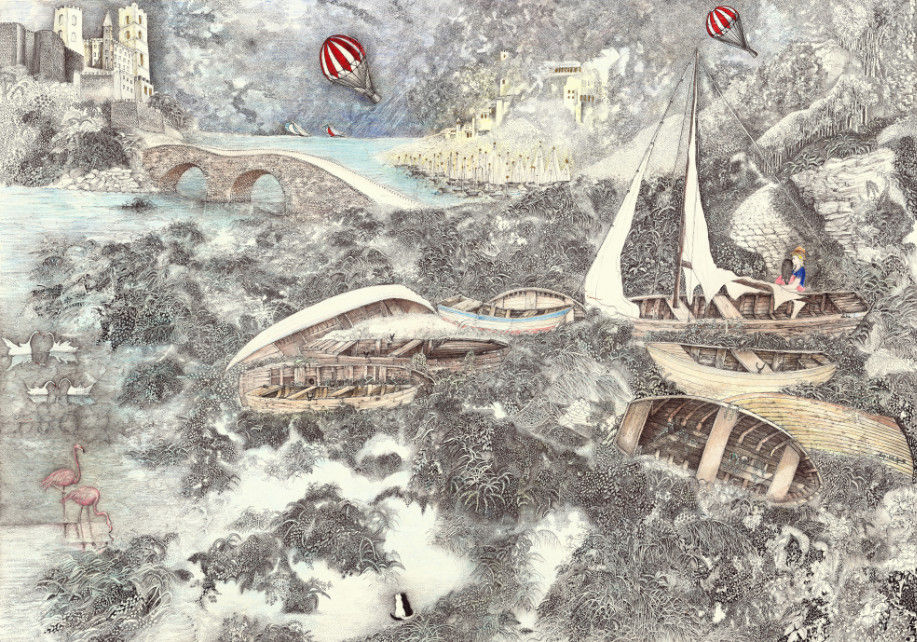
We have faced so many storms together and many hurricanes have driven us to the shore…and how many times have we repaired the tears in our sails, now ripped and worn? We were so young then but after everything that has passed, we are still here together… Our boat is old and tired of the many nails that have struck its heart….but we are still here, together… Together we will live through the quiet after the storm, we will not stay but we will set out once more on a new fantastic voyage, through a world waiting to be discovered… and it doesn’t matter if we have to face the stormy sea again, because we will face it together…so come away with me once more my love…


My Life I close my eyes and in a moment, my whole life flashes before me. I don’t remember the battles won or lost, but only those fought. I got to know you years ago and you were beautiful. Sometimes I hated you but mostly, I loved you. I have become bold like an eagle and found the courage to risk. Like the stag, I am now wiser and like my dear horse, I am faithful and have learnt the true nature of love. Suddenly, as if no more than a day has passed, I have become a man who knows that his youth will never return. But you, my Life, are perfect and you will never age. Take me by the hand once more as we have an eternity to travel! Inspired by ‘Wanderer above the Sea of Fog’ lDer Wanderer uber dem Nebelmeer) by Caspar David Friedrich
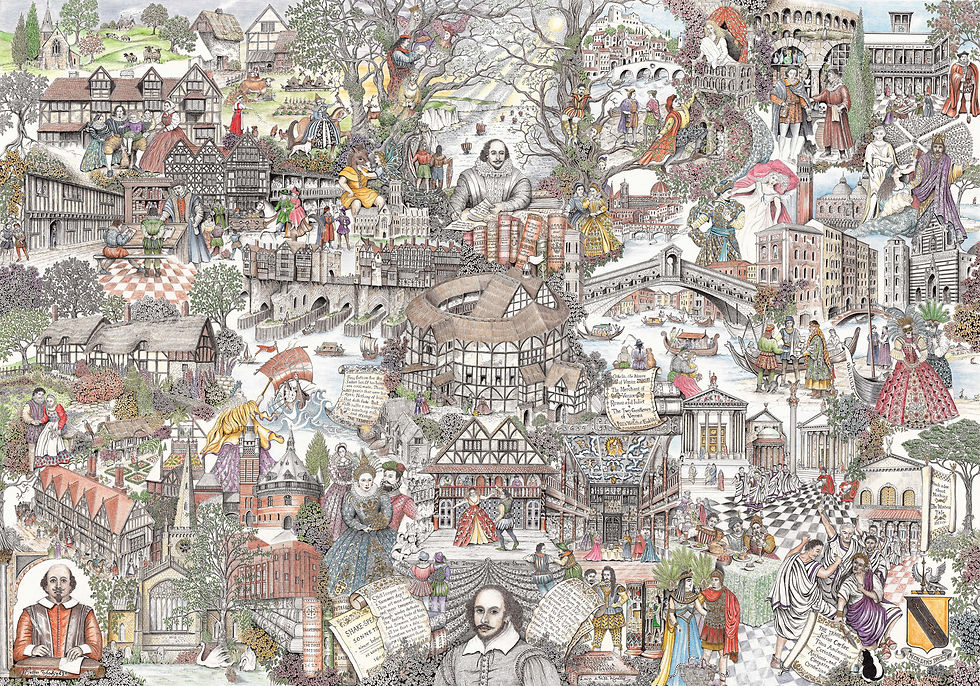
Born in Stratford-upon-Avon, Warwickshire, England, William Shakespeare wrote 154 sonnets, several poems and at least 37 plays, about a third of which are set totally or partly in Italy, whilst others still include Italian characters or references to Italian culture. Our drawing contrasts Shakespeare’s English roots with his extraordinary passion for Italy. The left side is dedicated to England, in and around Stratford-upon-Avon, where Shakespeare was born and died. There are scenes of the houses in which he lived, his school, his courtship with Anne, their children and life in a rural town. Towards the centre we move with Shakespeare to the bustle of London to explore his work as playwright and actor in the city, the Globe Theatre taking centre stage. On the right side we take a trip to Italy and the locations of Shakespeare’s ‘Italian’ plays, with scenes set in Rome (Julius Caesar, Coriolanus, Titus Andronicus, Antony and Cleopatra, Cymbeline), Venice (The Merchant of Venice, Othello), Verona and Mantua (Romeo and Juliet, The Two Gentlemen of Verona), Padua (The Taming of the Shrew), Florence (All’s Well That Ends Well), Messina, Sicily (Much Ado About Nothing, The Winter’s Tale) and the Adriatic (Twelfth Night and left of the Globe Theatre, The Tempest). The drawing includes many little details from Shakespeare’s life and work, such as the family stem, the books that inspired him and quotes and scenes from his plays which remain popular throughout the world to this day.

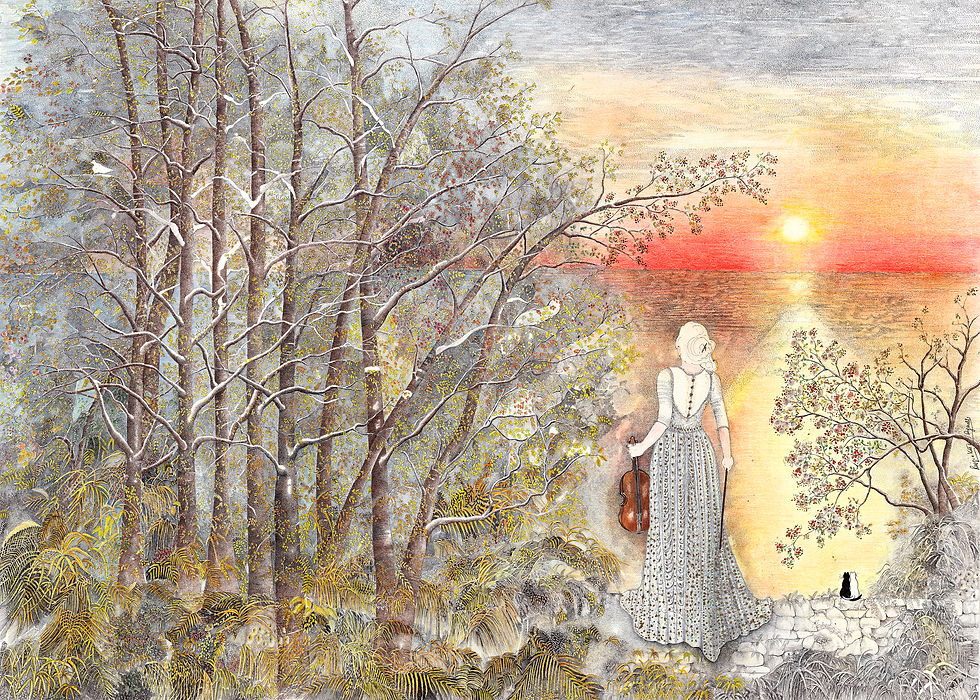
She is the most beautiful woman that I have ever known. She often accompanies me with her smile, asking for nothing and dancing only for me. She is my solitude and like a violin that plays in the distance, she is a ballerina who takes me by the hand and slowly caresses my heart!